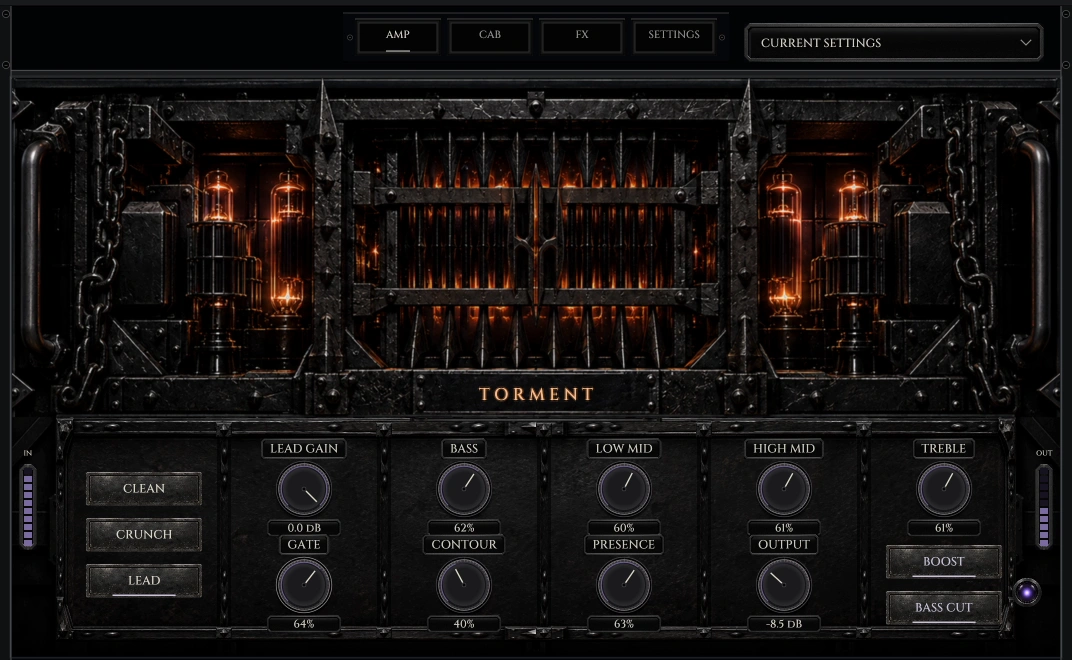
Seven named amp voices
Feral, Monolith, Necro, Chug Machine, Sub Furnace, Grind Rail, and Doom Engine give Core a real roster instead of a generic gain block.
The first Abyssal Audio amp suite: black-glass ANRS guitar and bass voices, real amp-head intent, stock cabs, user IR loading, and the Mangle parallel distortion bus for the ugly part of the mix.
Public checkout opens after the signed installer, Stripe webhook, and fulfillment path are verified.

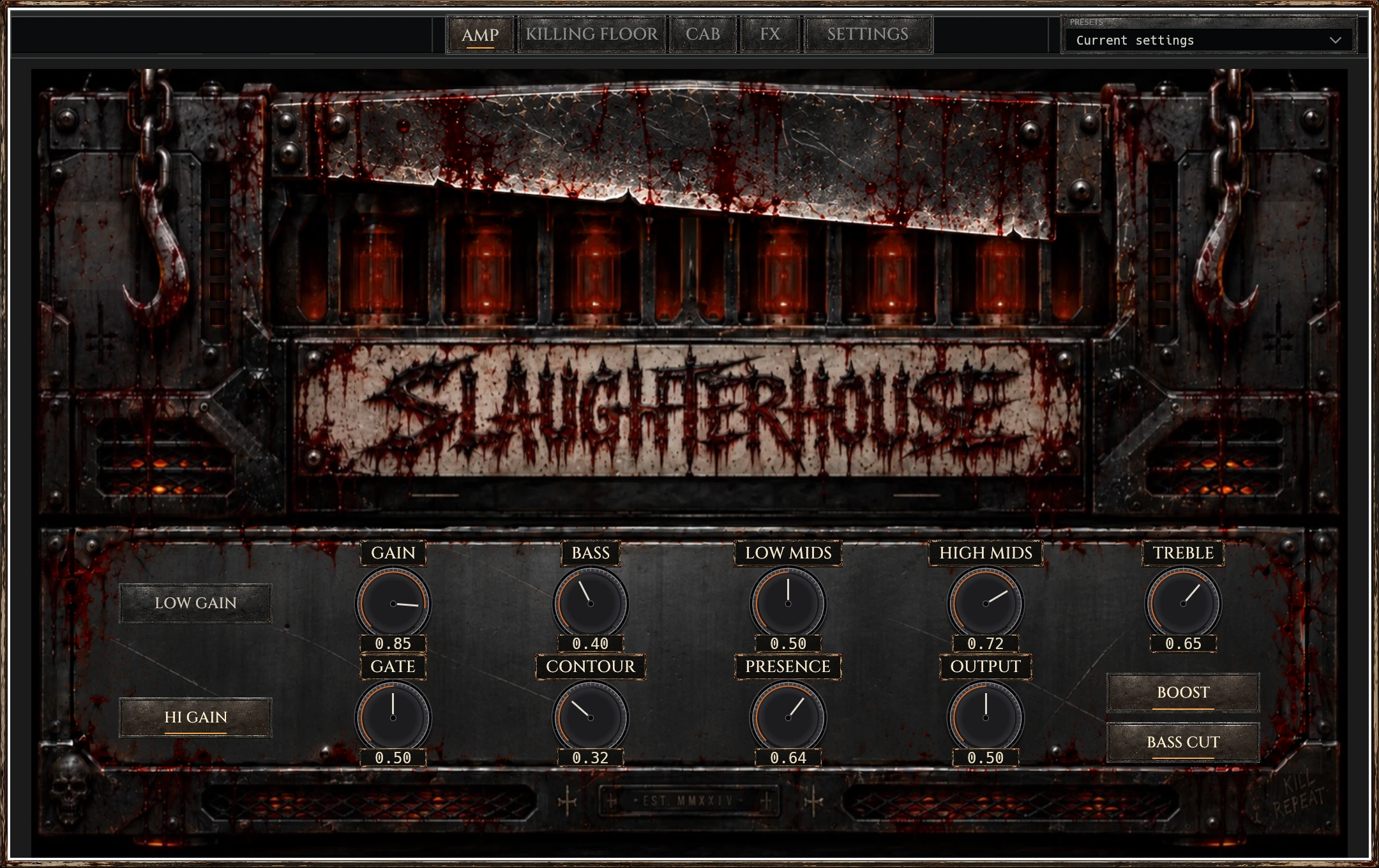
Abyssal Core presents the current roster as a polished multi-amp suite: model-specific amp roles, real hardware visual language, a dedicated cab column, dark-mode controls, and honest boundaries around what is proven today.
Feral, Monolith, Necro, Chug Machine, Sub Furnace, Grind Rail, and Doom Engine give Core a real roster instead of a generic gain block.
The marketing surface now follows the same idea as the product: choose the amp, understand its job, then shape the chain around it.
Sub, grind, clank, and Mangle lanes run in parallel so low end stays planted while pick attack and saw teeth cut through.
Future single-amp releases can stand on their own later. Today's buyer-facing product is the Abyssal Core multi-amp VST3 suite.
Gate to Tightener to Boost to Amp to Mangle to Cab to Limiter
Sub, Grind, Clank, and Mangle lanes to Blend to Bass cab to Limiter
Custom VST3 editor, host automation, meters, bypass, amp selection, cab controls
Abyssal Core is built around named amp voices with distinct roles, not a faceless model list. Pick the head that matches the riff, then push the chain from there.

Massive modern rhythm voice with thick low mids and controlled low-end authority.
Built for the main rhythm lane: heavy, wide, and disciplined enough to stay locked to drums instead of blooming into mud.
Mangle is an original fixed-character distortion bus inspired by dimed Swedish death metal pedal chains. It is not a circuit clone. It is a controlled way to blend low-mid grind and upper-mid saw into guitar or bass without throwing away the main chain.
The Windows release workflow builds AbyssalCore-0.1.0-Windows.exe with GitHub Actions and NSIS. The installer targets the system VST3 folder, then REAPER or another VST3 host can rescan and load Abyssal Core.
Intro paid beta Windows VST3 license for the first Abyssal Audio amp suite
Public checkout opens after the signed installer, Stripe webhook, and fulfillment path are verified.
Abyssal Core is a paid beta, not a final product. Real payments require Stripe test-mode verification, a live download host, refund/support/legal copy, and a final REAPER installer smoke test before launch.
Abyssal Audio uses black industrial materials, cold glass, graphite, scorched metal, blue-violet signal accents, and tiny poisonous signal details. The tone is premium and hostile, not cosplay horror.
No fake studio quotes. Just the useful launch facts.
No. Abyssal Core is not a neural amp modeler. It uses Abyssal ANRS, short for Adaptive Nonlinear Response Synthesis: original algorithmic response surfaces, dynamic filtering, load-memory behavior, bounded nonlinear stages, stock cab responses, user IR loading, a parallel bass rack, and the Mangle bus. Pitch detection, NAM, RTNeural, downloadable amp imports, and AU are roadmap work.
The paid beta path is a Windows VST3 installer named AbyssalCore-0.1.0-Windows.exe. macOS standalone and VST3 builds exist locally, but the documented buyer delivery flow is Windows-first.
The repo is set up around REAPER-friendly VST3 installation and rescanning. Final launch still needs a manual REAPER scan pass against the release installer before taking real money.
Not in this release. Abyssal Core is the current suite. Individual Abyssal amp releases can come later, but they are not the buyer-facing product today.
No. It is a paid beta, not a final product. Buy only if you accept the current Windows VST3 scope, manual support path, unsigned-installer caveat, and roadmap limitations.